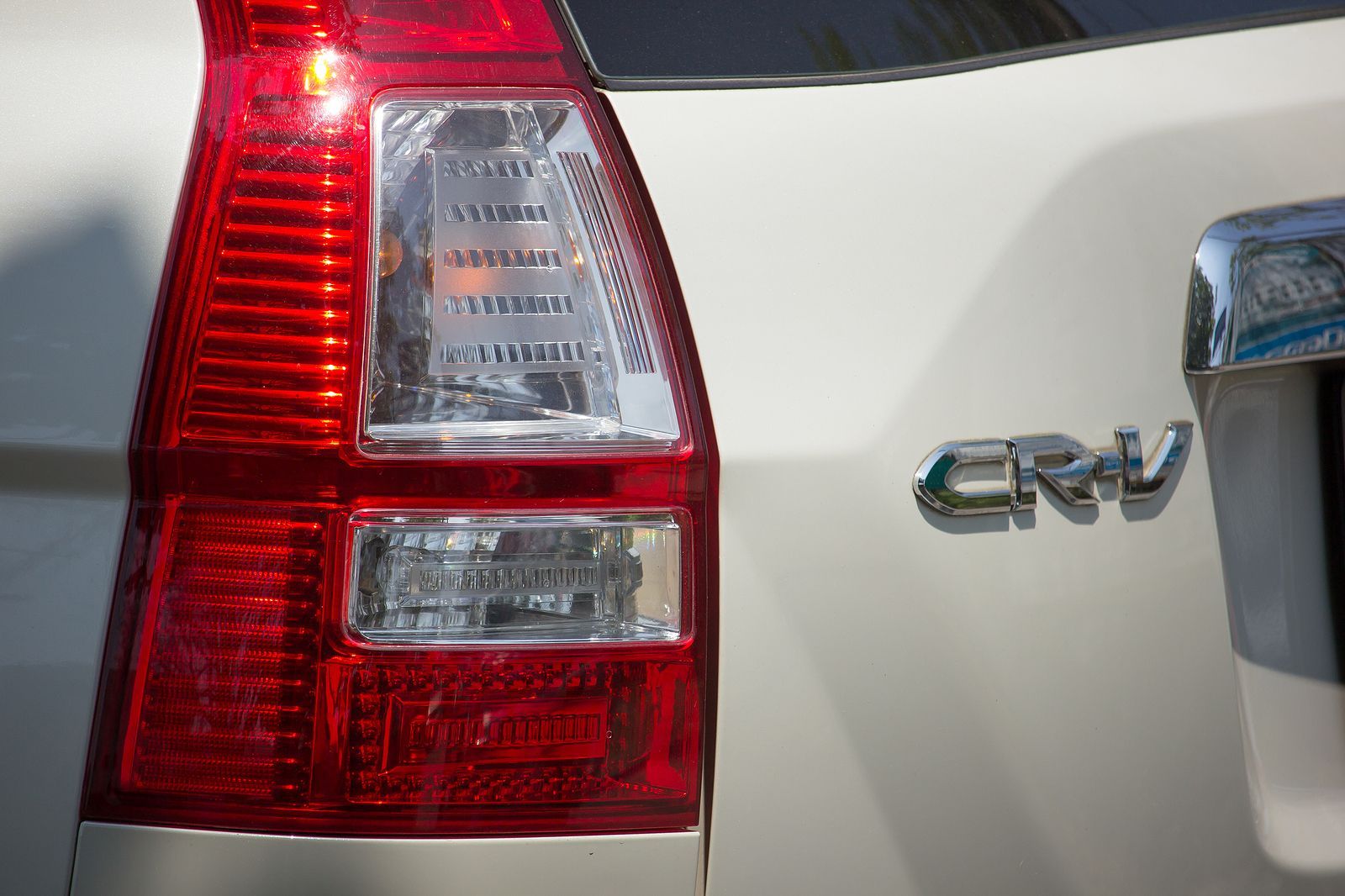
Why Does My Honda CR-V Make a Clicking Noise When Turning?

Auto Shops Located in: Chapel Hill, Durham, Taleigh, Apex, and Cary North Carolina

December 31, 2025
Why Does My Honda CR-V Make a Clicking Noise When Turning?

Why Does My Honda CR-V Make a Clicking Noise When Turning?

If your Honda CR-V makes a clicking noise when turning, it is usually a warning sign that a suspension or drivetrain component is wearing out. This is one of the most common concerns we see from CR-V owners, and ignoring it can lead to bigger repairs and safety issues.


Below is what causes the noise, how serious it is, and what to do next.


The Most Common Cause: A Worn CV Axle

In most cases, a clicking noise while turning in a Honda CR-V is caused by a failing CV axle, also known as a constant velocity axle.

CV axles transfer power from the transmission to the wheels while allowing the suspension and steering to move. When the outer CV joint wears out, it clicks during turns.


Common signs of a failing CV axle:


  • Clicking or popping during tight turns
  • Noise is louder when accelerating while turning
  • Sound usually starts on one side before the other
  • Grease visible inside the wheel from a torn CV boot


Once the protective boot tears and grease leaks out, the joint wears quickly and will eventually fail.


Other Possible Causes of Clicking Noises When Turning

While CV axles are the most common issue, other components can also create clicking or popping sounds.


Worn Strut Mounts

A worn strut mount can click or pop as the steering wheel turns. This noise typically comes from the top of the wheel well and may be felt through the steering wheel.


Tie Rod Ends

Loose or worn inner or outer tie rods can cause clicking noises and loose steering feel. These parts directly affect vehicle control and should be inspected quickly.


Ball Joints

Failing ball joints can create clicking or popping noises as the suspension shifts during turns. This is a serious safety concern and should not be ignored.


Sway Bar Links

Worn sway bar links or bushings often cause sharper clicking sounds when turning or driving over bumps.


How to Tell If the Clicking Noise Is Serious

The issue is likely serious if:


  • The clicking noise is getting louder over time
  • It only occurs while turning and not when driving straight
  • You feel vibration during acceleration
  • You notice grease inside the wheel or on suspension components


These symptoms strongly point to a failing CV axle or steering component.


Can You Keep Driving With a Clicking Noise?

You may still be able to drive short distances, but it is not recommended.


A completely failed CV axle can leave you stranded and may affect power delivery to the wheel. If the noise is caused by a ball joint or tie rod, continued driving becomes a safety risk.


Addressing the issue early usually keeps repairs simpler and more affordable.


What to Do Next

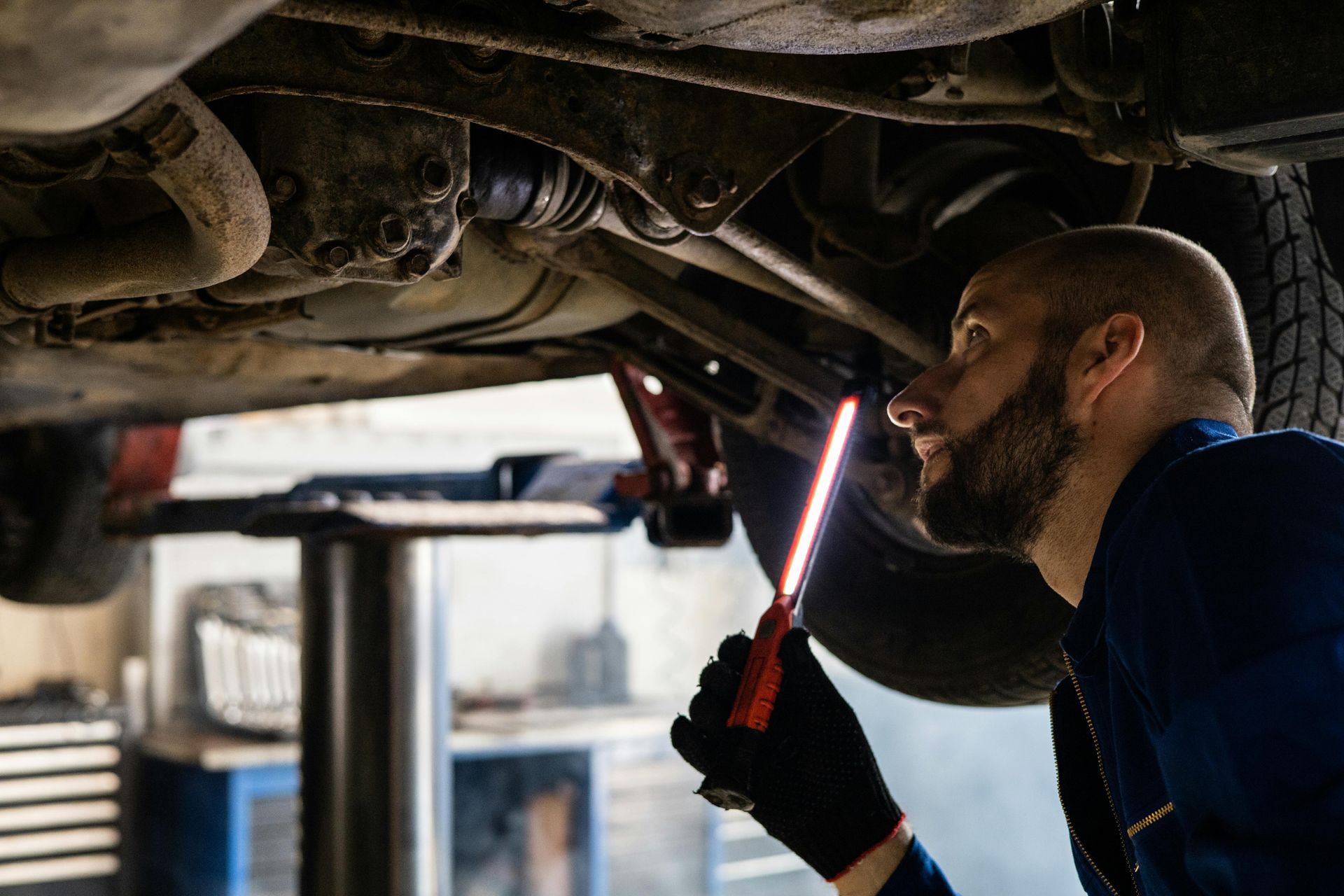
If your Honda CR-V is clicking when turning, schedule a professional inspection as soon as possible. A trained technician can quickly identify torn CV boots, worn joints, or loose steering components before they cause further damage.


At Chapel Hill Tire, our technicians inspect suspension and steering systems every day and can help keep your CR-V safe, quiet, and reliable on the road.

We’ve got all your automotive repair needs covered.

Man reaching for a tire in a warehouse. Tires are stacked on shelves. He is smiling.
November 6, 2025
Get to know Dru Gualdarama, the new store manager at Chapel Hill Tire’s University Place location. Learn about his passion for the automotive industry, leadership style, and commitment to the local community.
Mechanic showing a car owner paperwork in a garage, next to a car, under a raised vehicle.
October 21, 2025
Get a clear picture of your vehicle's condition with an independent inspection. Catch issues early, avoid costly repairs, and keep your car running reliably.
Two used tires stacked together, showing tread wear on the inner wall do to bad stock tesla camber
September 16, 2025
Stop uneven tire wear on your Tesla. Chapel Hill Tire installs camber correction kits in Chapel Hill, NC—extend tire life & improve handling today.
A row of black tires are stacked on top of each other.
By Erin Vernon May 14, 2025
Brakes stop your wheels, but tires are what really stops your car.
A bottle of green liquid is being poured into a car radiator.
By Marc Pons May 8, 2025
It can be hard to keep up with all of the care that your vehicle needs. When a light comes on in your dashboard or a mechanic lets you know you are due for a new service, this can surface lots of questions. One common source of service confusion is the coolant flush. Thankfully, Chapel Hill Tire has you covered. Here is a look at the answers to all of your common coolant flush questions. Is it Really Necessary to Flush Coolant? Perhaps the most common question surrounding this service is, “Are coolant flushes really necessary?” The short answer is YES.  Your engine creates friction and heat in order to run properly. However, your engine is also made of metal pieces, which are malleable and vulnerable when heated. Extensive heat can cause a blown radiator, cracked gasket head, warped cylinder, and melted seals, among numerous other serious, dangerous, and expensive issues. To protect your engine from this heat, your radiator contains coolant that absorbs excess heat. Over time, your coolant will become worn out, burnt, and contaminated, causing it to lose its cooling properties. While you might not like hearing that you are due for an extra service, coolant flushes are necessary for a safe and healthy vehicle. Does Coolant Matter During Cold Weather? As we approach the fall and winter temperatures, you may become increasingly tempted to ignore coolant services. Does coolant matter in the cold weather? Yes—the friction and power of your engine generate heat year-round. While the summer temperatures certainly do intensify engine heating, coolant is still incredibly important in the winter. Additionally, coolant contains antifreeze, which will protect your engine from the dangers of cold temperatures. What is the Difference Between Coolant and Radiator Fluid? When reading your owner’s manual or various resources online, you might find “coolant” and “radiator fluid” terms used interchangeably. So are they the same thing? Yes! Radiator fluid and coolant are different names for the same material. You might also find it referenced as “radiator coolant,” which offers the best of both worlds. Is Coolant the Same as Antifreeze? Another common question that drivers ask—“Is antifreeze the same thing as coolant?” No, these two are not quite the same. Rather, coolant is the substance used to regulate the temperature of your engine. Antifreeze is the substance within your coolant that prevents freezing in the winter. You might find some sources that refer to coolant as providing cooling properties only; however, since the coolant often contains antifreeze, it has widely become a general term that encompasses both. How Frequently Are Coolant Flushes Needed? Generally speaking, a coolant flush is often needed every five years or 30,000-40,000 miles. However, coolant flush cadence can be impacted by your driving patterns, local climate, vehicle age, make, and model, as well as other factors. Consult your owner’s manual or a local professional for insight on whether or not you are due for a coolant flush. Additionally, you can look for signs of a needed coolant flush. These include a sweet maple syrup car smell and vehicle engine overheating. Take a closer look at these and other signs of a needed coolant flush here . How Much Does a Coolant Flush Cost? Many mechanics try to hide their prices from customers, which can create questions, confusion, and unpleasant surprises. While we cannot speak for the costs you will face at other mechanic shops, Chapel Hill Tire offers transparent pricing for every coolant flush and other services . Our coolant flushes cost $161.80, which includes the safe disposal of your contaminated fluid, professional-grade cleaning of your cooling system to remove rust and sludge, high-quality new coolant, coolant conditioner to keep it preserved, and a visual inspection of your entire cooling system. Chapel Hill Tire: Local Coolant Flush When you are due for your next coolant flush, visit one of Chapel Hill Tire’s eight Triangle-area locations, including our mechanics in Raleigh, Durham, Carrboro, and Chapel Hill. Our professionals will help you drive happy by getting you in, out, and on your way with fresh coolant. Make your coolant flush appointment today to get started!
A close up of a car engine with oil being poured into a bucket.
By Marc Pons May 5, 2025
Oil Change Prices Why do most mechanics and dealerships hide the costs of their services? You might be wondering if they will try to take advantage of your visit and overprice their services. Or perhaps they think that their oil changes are so expensive that displaying their service costs would deter customers from visiting the shop. At Chapel Hill Tire, we value our customers, which is why we display transparent pricing for all of our services. Here is everything you need to know about the actual price of oil changes. What Does an Oil Change Involve? One of the most common vehicle services—and arguably the most important for keeping your engine protected—is the oil change . This product keeps your engine lubricated so that it can function without harmful friction. Over time, your oil becomes filled with debris, making it less effective in providing proper protection for your engine. Your oil levels also become depleted as your engine burns through your oil supply. This is where an oil change comes in. Not only do you need to supply your vehicle with oil, but you also need to remove the old oil and replace the filter that prevents the harmful debris from entering your engine. If you partner with an outstanding oil change expert, you will also receive routine vehicle checks included in the price of your oil change. On average, you need an oil change every 3,000 miles or every six months , whichever comes sooner. Maintaining regular oil change services will keep your vehicle protected and prevent costly engine damage from occurring. How Much Does an Oil Change Actually Cost? Every mechanic has to price their oil changes in a way that helps keep business open. However, you want to ensure that this number does not take advantage of your visit. Here is how much an oil change actually costs your mechanic: Oil Costs : Perhaps the most obvious expense, the mechanic will pay for several quarts of oil to fill your reserve. There are multiple different types of oil that vary in thickness, which can affect your oil change costs. If you take a look at your oil cap, it will tell you which type of oil your engine requires. Labor Cost : Here, you pay for the years of experience and the professional care provided by your oil change technician. You also reap the convenience of having an expert take care of your vehicle. Filter Cost : Your oil filter keeps contaminants out of your engine. These contaminants can wear away at your filter over time, which is why you require regular filter replacements. The cost of your filter may vary slightly depending on your vehicle make, model, trim, and year. Disposing of Used Oil Cost : Part of the hassle of an at-home oil change is navigating the disposal of the old, messy, and contaminated oil. An expert mechanic has the resources and an established process to ethically dispose of old oil. Collectively, what you pay will reflect the cost of the oil change for your mechanic. Even with all of these offerings, oil changes are often reasonably priced—usually running between $40-$70. You can also find oil change coupons to help offset the cost of this service. Transparent Oil Change Prices You won’t find hidden costs here at Chapel Hill Tire. Instead, we keep all of our prices clear and transparent on our services page . The only variance possible in this price is if your vehicle requires a filter or oil that is non-standard or higher in cost. This price includes five quarts of oil, an oil filter change, an air filter check, a fluid levels check, an inspection of your belts and hoses, and a tire air pressure check. Visit Chapel Hill Tire | Oil Changes with Transparent Prices If you are ready to ditch the traditional hidden oil change costs, visit your local Chapel Hill Tire location. With 8 Triangle-area shops—including mechanics in Raleigh , Chapel Hill , Durham , and Carrboro —you can get a quick and affordable expert oil change no matter where your day takes you. Schedule your Chapel Hill Tire oil change today to get started!
A man is changing a tire on a machine.
March 25, 2025
Buying new tires can feel overwhelming—there’s plenty to consider, from price and brand to performance and safety. To simplify this essential purchase, this guide walks you step-by-step through choosing the right tires for your vehicle, ensuring you get the best value and performance for your investment.
A person is fixing a tire with a screwdriver
March 24, 2025
Fix-a-Flat is a popular liquid tire sealant meant to seal small punctures in a tire and is regularly used by drivers looking for a quick solution to a flat tire. While many people use Fix-a-Flat, it can cause more problems than it solves, and most mechanics won’t recommend you use it. As you decide whether you should keep a spare can of Fix-a-Flat in your car or garage, take a moment to learn why Fix-a-Flat and other similar products can be bad for tires and what to use instead when you get a flat.
A car with a chapel hill sticker on it
By Jess Cervantes March 10, 2025
Wondering how to properly clean pollen off your car? Chapel Hill Tire can help. Review our guide to protecting your car from pollen damage today!
A car is driving down a road with a circle around it
By Mike Storey March 10, 2025
Want to learn more about modern safety features in cars? Chapel Hill Tire can help. Review our guide to the 5 main types of vehicle safety features.
Show More