How to Keep Your Car’s AC Working
Modern life has spoiled most of us. We’re used to traveling around with adjustable seats, auto-everything, and GPS so we never get lost. We also expect a cooling system we can set to the precise temperature for maximum comfort.
Your car AC is one of those things you take for granted. That is until it dies during the heat of the North Carolina summer. Then you realize how much you appreciate it.
You can ignore your car’s AC system until it stops working. Hopefully, this doesn’t occur on a road trip far from your trusted local repair shop.
Or you can schedule regular AC recharge services. Once every year or two is probably sufficient. Spring is a good time to do this.
We advise you to schedule an AC recharge before your unit stops blowing cold air entirely. If you notice that the air coming out of your vents is not quite as brisk, give us a call.
How Does Your Car’s AC System Work?
Before we answer the question ‘what is an AC recharge,’ let’s briefly describe how electric air conditioning works.
An auto air conditioning unit is a ‘closed-loop’ system. This simply means that there is no starting point or ending point. The refrigerant goes around and around. If your system has no leaks, it works great. The refrigerant doesn’t need to be ‘topped-off.’
Car air conditioning systems contain these five parts: a compressor, a condenser, a thermal expansion valve, an evaporator, and an accumulator (or receiver/drier).
The AC Compressor
The compressor pushes the refrigerant through the system at high pressure. The refrigerant turns from liquid to gas form when it is subjected to high pressure. This process pushes the gas to high temperatures as it pulls heat from the surrounding air.
Refrigerant has a very low boiling point. If you remember your high school science class, you remember that water boils at 212 degrees Fahrenheit. In contrast, R-134a car AC refrigerant boils at minus 15 degrees.
When the refrigerant starts boiling—thereby turning into a gas—it absorbs heat. This is how it cools the air down in your car.
But now that the refrigerant is in gas form, we need to turn it back into liquid so the process can continue. That’s what the compressor does.
The Car AC Condenser
The condenser works like a radiator and cools the refrigerant. As the gas cools down, it turns back into a liquid.
The AC Thermal Expansion Valve or Orifice Tube
Now that the refrigerant (which is liquid at this point) moves through the tubing to a small valve. The valve tightly regulates the flow of refrigerant and lowers the pressure. In the process, the liquid refrigerant is turned back into a gas, though at much lower pressure than before.
The AC Evaporator
The next stop for the cold refrigerant is the evaporator which lives in your dashboard. The evaporator turns the liquid back into a gas which cools the surrounding air. An electric fan blows the cold air through the vents and into the cabin, thereby keeping your ice cream from melting.
The Accumulator or Receiver/Drier
Automotive air conditioning units also pull the humidity out of the air. This is a welcome feature in humid climates like ours. Your system has either an accumulator or receiver/drier to perform this function.
What If I Can’t De-Fog My Windows In Cold Weather?
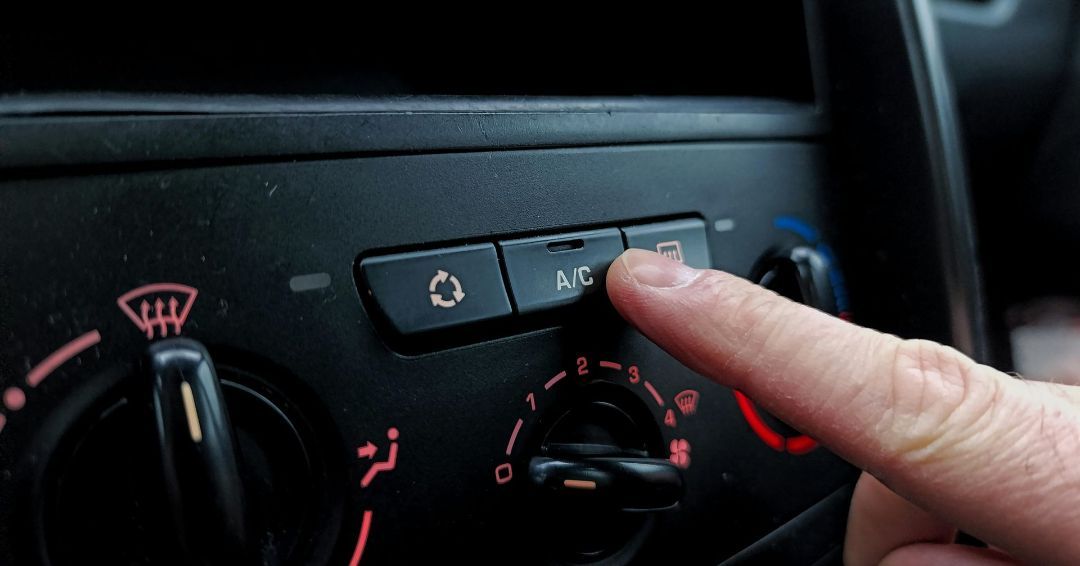
Because AC units work so well at de-humidifying, most automobiles use the AC system to de-fog windows. If your system can’t clear your windows during cold weather, it could be a sign you need an AC recharge.
What Is An AC Recharge?
AC systems perform best when the refrigerant is at the recommended level. There isn’t a lot of wiggle room here.
Before your refrigerant is replaced, your service technician will test the unit. An ultraviolet dye will be injected into the system. This allows your technician to detect any leaks that are present.
Your technician will also test or inspect the other system parts previously discussed.
For the recharge part of the service, your technician will attach a special machine to your air conditioning unit. The machine will suck out the existing refrigerant and oil. Then they will refill it to the right level.
Wasn’t Freon Outlawed Years Ago?
Older drivers may remember that the Environmental Protection Agency outlawed Freon because it dissolves the ozone layer. The type banned (in 1994, by the way) was R-12 Freon. Air conditioning systems manufactured since then use R-134a Freon. If you drive a car built before 1994, you can retrofit your AC for the legal refrigerant. Talk to us if you need more information about AC retrofits.
Chapel Hill Tire AC Repair
If any parts, hoses, or belts are malfunctioning, your technician will replace them with quality equipment. Your service advisor will also check for blockages that reduce cooling function. Our 3-year/36k maintenance warranty gives you peace of mind.
Where Can You Get an AC Recharge?
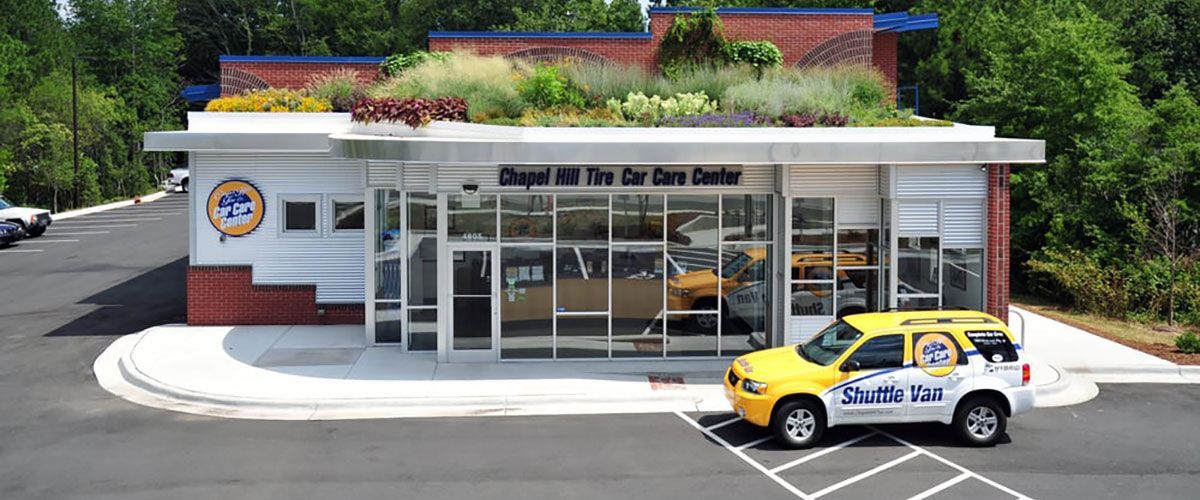
The Chapel Hill Tire AC recharge is available at all eight of our Triangle-area locations. This includes AC service in Chapel Hill, Raleigh, Carrboro, and Durham. No matter where you find yourself in the NC Triangle, the Chapel Hill Tire professionals can help you get your car’s AC working like new. Bring your car into your local Chapel Hill Tire location for a quick and efficient AC recharge.
Keep Your Cool With Chapel Hill Tire Air Conditioning Service
The next time you feel a refreshing blast of cool air coming from your vent, you can thank Willis Carrier, the inventor of electrical air conditioning.
The next time you need an automotive AC service, you can rely on Chapel Hill Tire for providing timely, quality work at a fair price. Give us a call today to learn more, or make an appointment to come get an AC recharge.